
2026-10-10 ·
Repair or Replace? How to Decide When Your Water Heater Fails
Understanding the Lifespan of Austin Water Heaters
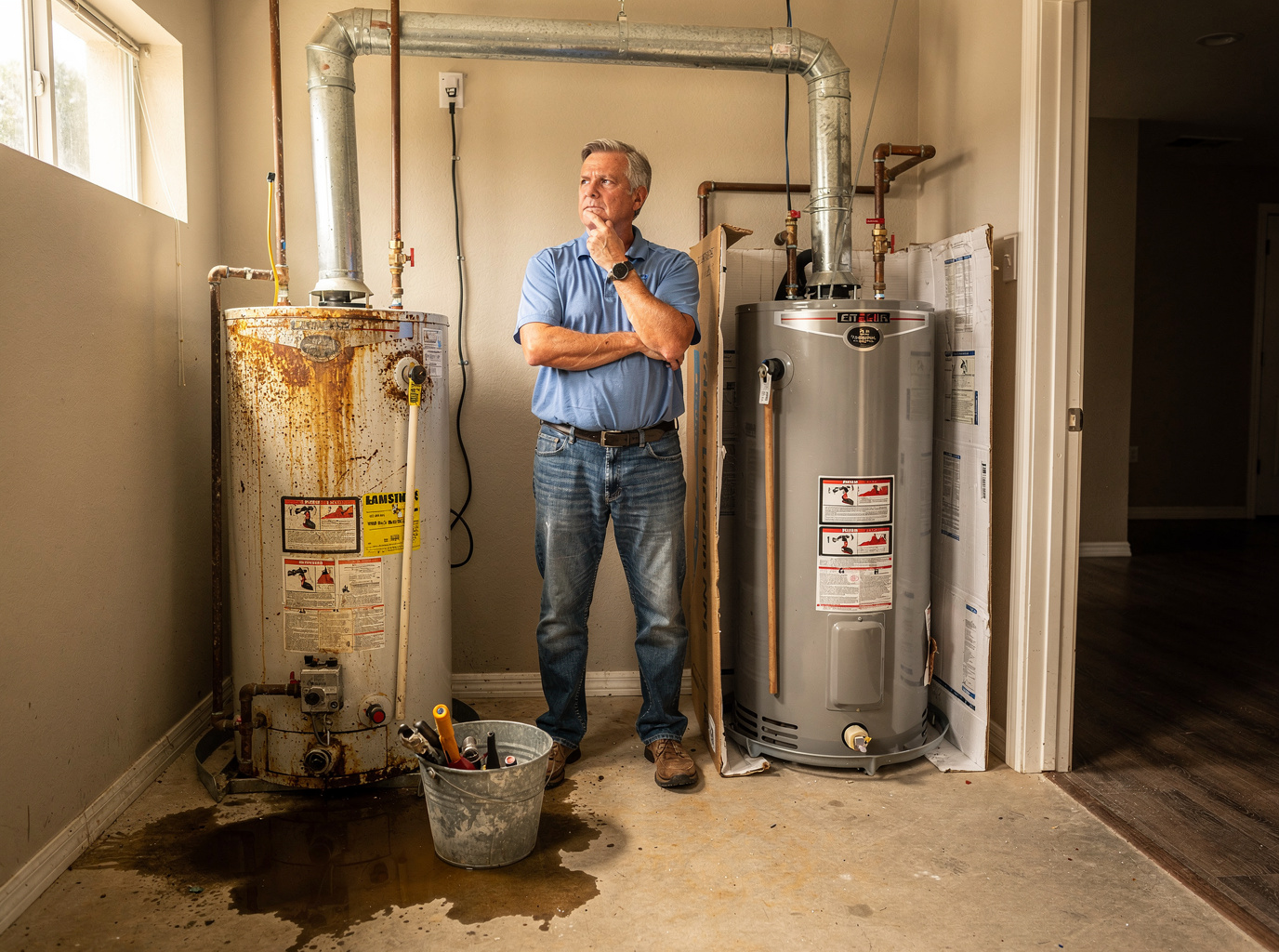
In Travis County, we deal with unique water conditions that can accelerate the wear and tear on plumbing equipment. Most standard tank-style water heaters have a functional lifespan of 8–12 years. If your unit is approaching the 10-year mark and begins to show signs of failure, replacement is often the more prudent financial decision. Repairing a decade-old unit is frequently a temporary fix, as other components—like the dip tube, heating elements, or the tank lining itself—are likely near the end of their service life as well. Whether you live in a historic bungalow in Hyde Park or a newer build out near Mueller, the mineral content in our local water supply can lead to sediment buildup at the bottom of the tank. This sediment insulates the burner or heating element, forcing the system to work harder and run longer, which significantly shortens the lifespan of the appliance. If you are constantly calling for Water Heater Repair on a unit that is over 10 years old, you are likely just delaying the inevitable cost of a new installation.
When Repair Is the Right Choice
Not every failure requires a full system overhaul. If your water heater is relatively new—perhaps 3 to 6 years old—a targeted repair is often the most cost-effective solution. Common issues such as a faulty thermostat, a burnt-out upper heating element, or a loose electrical connection can be resolved without replacing the entire tank. For residents in neighborhoods like Clarksville or Travis Heights, where older homes might have tighter utility closets, a simple repair allows you to avoid the logistical headache of swapping out a unit in a cramped space. If you notice your water isn't getting hot enough or you are dealing with a minor leak, it is worth having a professional inspect the Thermostat & Heating Element Replacement options before assuming the worst. We see many units in South Congress and Downtown that just need a quick tune-up to get back to full capacity, provided the tank itself hasn't started to rust through.
The Warning Signs of Imminent Failure
Being proactive is key to avoiding a flooded garage or utility room. There are specific red flags that indicate you should stop looking for repairs and start planning for a Water Heater Replacement. The most obvious sign is a persistent, slow leak at the base of the tank; once the tank lining is compromised, it cannot be patched, and failure is imminent. Another indicator is discolored, rusty, or metallic-tasting water, which suggests the interior of your tank is corroding. If you hear loud popping or rumbling noises, that is almost certainly sediment buildup at the bottom of the tank, which creates hotspots that damage the metal. For homeowners in Westlake or Barton Hills, where homes often have finished floors, a leaking water heater can cause significant damage to your property. If you suspect your unit is failing, don't wait for a total blowout—especially during our hot, humid summers when you rely on your system for daily comfort.
Comparing Efficiency and Long-Term Costs
When you are forced to replace your unit, it is the perfect time to evaluate whether a standard tank or a tankless system is better suited for your lifestyle. Many Austin residents, particularly those in newer developments near Round Rock or Pflugerville, are opting for tankless technology to save space and energy. While the upfront cost is higher, the efficiency gains can be substantial. Understanding the differences between these systems is crucial before making a commitment. For a deep dive into how these systems perform in Texas, check out our guide on Tankless vs Tank Water Heater: Which Is Better for Texas Homes?. If your current setup is inefficient or undersized for your family's needs, upgrading during a replacement allows you to right-size your capacity. We operate Mon–Fri 8am–6pm and Sat 9am–2pm to help you assess your home's specific plumbing demands, ensuring you get a unit that handles our mild winters and high-demand months effectively.
Making the Final Decision
Ultimately, the choice between repair and replacement comes down to simple math and risk assessment. If a repair costs more than 50% of the price of a new unit, or if the unit is out of warranty, replacement is almost always the smarter investment. We see many homeowners in Zilker and surrounding areas who choose to repair a 5-year-old unit because it still has plenty of life left, while others choose to replace a 9-year-old unit to avoid the stress of a potential emergency failure during the holidays. If you are still unsure, we can provide an upfront quote and an honest assessment of your current system's health. We don't push for unnecessary replacements; we focus on workmanship you can inspect and solutions that make sense for your specific home. Whether you are dealing with a stubborn leak or just want to upgrade your home's efficiency, we are here to provide the expertise you need to make an informed decision.